Nature Play and the Sense of Taste
Berries, herbs, vegetables, edible flowers, and wild foods give children delicious ways to explore the world through taste.
Taste is one of the ways children learn what the world is made of.
Taste receptors throughout the mouth help the brain identify flavors like sweet, sour, salty, bitter, and umami. This sensory system also plays an important survival role, helping us learn what is safe, nourishing, and enjoyable to eat.
Children actually have more taste buds than adults, giving them a particularly rich stream of gustatory information as they build what Jena describes as a kind of internal food “database.” Nature gives them countless opportunities to add to it.
A ripe berry picked straight from the plant is a very different sensory experience from the same berry sitting quietly on a dinner plate.
Growing Food Can Make Trying It Easier
Children are often more willing to try foods they have helped grow. A cherry tomato presented at dinner might get rejected, while the same tomato discovered on a plant during play can feel like an adventure instead of a demand.
Edible plants woven into a playscape let tasting happen naturally. Kids can discover strawberries under leaves, snack on green beans, pick berries, or graze on herbs while they move through the space.
Taste Builds Language Too
Tasting can also become a language activity. Jena suggests choosing something from the garden together, slowing down to notice the flavor, and then describing it.
Instead of stopping at “good,” “bad,” or “okay,” children can practice describing sweetness, sourness, texture, intensity, and even how a particular flavor makes them feel.
Create a Graze-able Playscape
Edible gardens do not have to live in a separate vegetable patch. Food plants can be mixed directly into children’s play and learning spaces.
Potted herbs, berry bushes, fruit trees, climbing beans, cherry tomatoes, and edible groundcovers can all become part of the landscape. The result is a space children can literally taste as they explore it.
Sensory-rich nature play can be something children climb, smell, touch, hear — and snack on.
Sensory Plants for Taste
Familiar edible plants are an easy starting point. Jena highlights strawberries, blueberries, thornless raspberries and blackberries, grapes, figs, apples, apricots, plums, pears, beans, cucumbers, cherry tomatoes, and sugar snap peas as kid-friendly options.
Less-common choices can make the experience even more interesting. Honeyberry, lingonberry, aronia, quince, pawpaw, and jujube can introduce children to flavors they may not encounter at the grocery store.
Herbs Are Naturally Multi-Sensory
Herbs combine strong flavor with fragrance and texture, making them especially useful in sensory spaces.
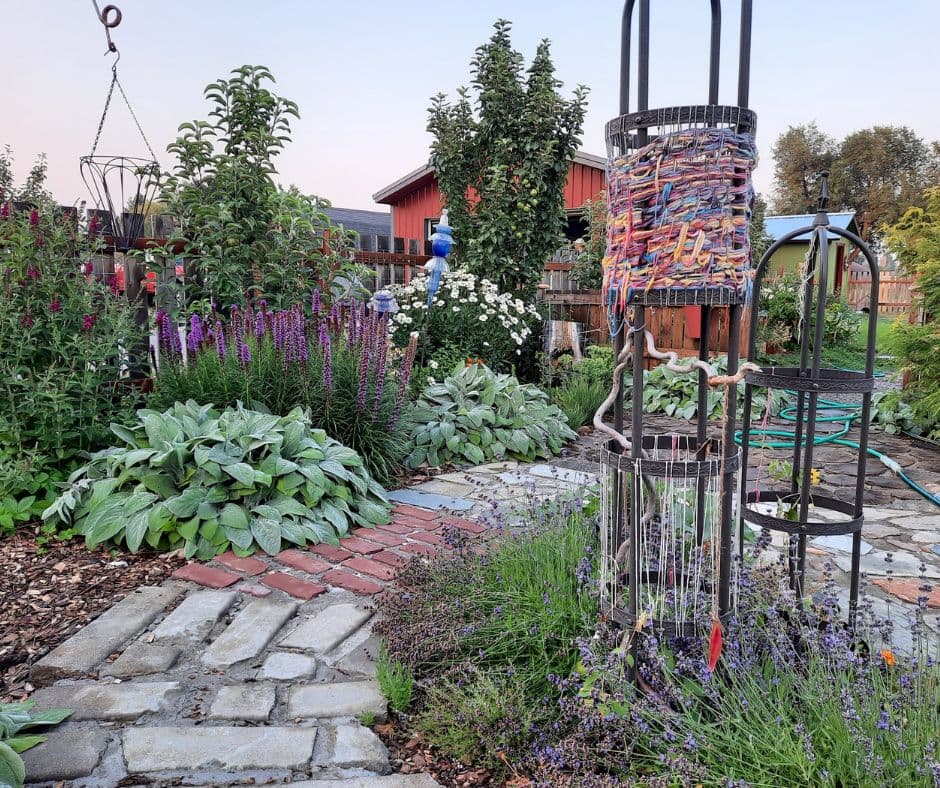
Jena recommends basil, lemon balm, rosemary, creeping thyme, oregano, chives, mint, and lavender. Many work well in pots or directly in the landscape, and creeping thyme can even grow between stepping stones where it releases fragrance when brushed or stepped on.
Edible Flowers Make Taste More Playful
Flowers can be part of the edible landscape too. Nasturtiums, pansies, calendula, dahlias, peonies, roses, lilacs, forsythia, apple blossoms, carnations, and hollyhocks can all bring color, texture, scent, and flavor into children’s food experiences.
Adding edible petals to a salad or snack can turn ordinary food into something visually surprising and inviting.
Wild Edibles Add Another Layer of Discovery
Jena also encourages exploring edible plants already growing nearby. Dandelions, violets, clover, chickweed, chicory, amaranth, and other wild plants can become part of a child’s understanding of their home landscape.
Her family even gathers wild greens and edible flowers to make what they call a “yard salad,” and they have made dandelion jelly from plants growing on their property.
Wild-food identification does require care. Only eat plants that have been positively identified as edible, and avoid plants from areas exposed to pesticides, herbicides, roadside pollution, or other contamination.
Let Taste Be Part of the Landscape
A sensory-rich nature play space does not have to treat food as something separate from play. Growing, picking, smelling, touching, tasting, and talking about edible plants can all happen naturally as children move through the environment.
The more ways children can interact with food without pressure, the more opportunities they have to build curiosity, confidence, sensory awareness, and positive associations with what they eat.
Nature Play for the 7 Senses
Explore more ways to create sensory-rich natural play and learning spaces for children through Jena’s guide to the seven sensory systems.
Explore the Guide >